Office Clearance in Hammersmith

Office clearance in Hammersmith needs to be organised, tidy and practical, whether you are emptying a single suite, changing floors, or clearing a workspace at the end of a lease. We handle the removal of desks, chairs, filing units, shelving, screens and mixed office contents with a clear focus on keeping the process straightforward for businesses and managing agents. The aim is simple: make the space ready for its next use while dealing with items in a sensible and compliant way.
Our service can support routine office moves, refurbishments and end-of-tenancy clearances, as well as the removal of surplus furnishings that have built up over time. Different workplaces need different levels of clearance, so we adapt the work to the layout, access and the volume of items involved. Where a site contains a mixture of furniture, paperwork, fixtures and general waste, the job is planned so that the right items are taken away without creating avoidable disruption.
If you are comparing clearance options, it helps to know which parts of the job are included and which items need separating in advance. You can request a quotation once you are ready, and in the meantime use the sections below to see how our office clearance work is usually organised. For a fuller view of related services, you can also read about business waste removal and how it differs from a clearance of furniture and stored items.
Clearance for desks, seating and office storage
Most office clearances begin with the furniture that takes up the most space. Desks, task chairs, meeting tables, cupboards, lockers and shelving often make up the bulk of the load, especially when a workplace is being reconfigured or emptied before a move. We remove these items in an orderly way so that walkways, lifts and loading points are used sensibly, helping the clear-out to proceed without unnecessary delays or damage to the surroundings.
In many premises, furniture is mixed with smaller contents such as pedestals, monitor arms, noticeboards and loose stationery. These smaller items can be grouped during the clearance so that usable furniture is separated from general waste where appropriate. If you are also dealing with domestic-style contents in a mixed premises, our flat clearance page shows a similar approach to sorting and removal, although office work usually involves a different balance of fixtures, furnishings and workplace equipment.
How furniture removal is handled
We aim to clear furniture in a way that suits the site rather than forcing everything through one routine. That means working around access limits, lift sizes, shared corridors and building rules when these are part of the job. Where items need to be dismantled before removal, that is usually easier to manage than trying to move a large desk or boardroom table in one piece. Careful handling matters, especially in offices with glass screens, cable runs or fitted storage nearby.
Planning an office clearance around access and timing

Many office clearances are arranged around opening hours, handover dates or refurbishment schedules, so timing is often just as important as the physical removal. We can plan the clearance to suit the space available, the number of items involved and any building requirements that affect collections, lifts or loading. This is particularly useful in shared premises where the clearance needs to be completed with respect for neighbours, reception areas and other occupiers.
Before a quotation is prepared, it is usually helpful to know the approximate floor level, whether there is lift access, and which rooms contain the items to be cleared. A simple list is often enough for the first stage, although photographs can make it easier to judge the volume and type of furniture involved. For pricing details and the sort of factors that may affect a job, see pricing and quotes; it gives a broader picture of how different clearances are assessed.
Good planning reduces confusion when a workplace contains both reusable items and general waste. It also helps when there are desks in one room, archive boxes in another and bulky storage units elsewhere. If you have a deadline for moving out or returning the space, say so early in the enquiry. Even a short outline of what remains on site can make it easier to shape the work around the actual layout rather than making assumptions.
Office equipment, mixed contents and careful sorting
Office clearance is not limited to plain furniture removal. Many workplaces also need help with old equipment, redundant accessories and mixed contents that have gathered in cupboards, storage rooms or under desks. The scope can include monitor stands, computer peripherals, office partitions and other non-confidential contents, provided the item types are described clearly at the outset. Where you need a broader removal service for loose materials, our waste removal page explains the wider category of items that can be collected.
Sorting is one of the most important parts of a professional clearance because not every item should be handled in the same way. Reusable furniture, recyclable components and general waste may need to be kept apart, especially if a site is being emptied quickly or handed over in stages. Where the items are mainly furnishings, our furniture clearance service is the closest match; where the items are to be discarded, furniture disposal covers the removal and onward handling of those pieces.
Businesses sometimes ask for a clearance because they have accumulated more than they want to move to a new location. Others simply need the space returned in good order after a reconfiguration. In both cases, the practical value is the same: keep the useful items in circulation where possible and remove the rest without making the job more complicated than it needs to be. That balance is often the difference between a smooth clearance and a rushed one.
Archive rooms, cupboards and back-office storage

Storage areas often hold the hardest mix of items to sort because they collect over time. Archive boxes, old stationery, obsolete binders, spare chairs, broken fittings and duplicated paperwork can all end up in the same room. An office clearance can include these back-of-house spaces as well as open-plan floors, so the work is not limited to what visitors see. The objective is to empty the space in a structured way and leave it ready for the next use.
Archive rooms sometimes contain items that need more careful handling than ordinary waste, particularly where there are documents, folders or records mixed in with furniture. We do not make assumptions about contents, so the important thing is to describe what is there and flag anything that should be separated before removal. If your workspace also has loft storage rather than office cupboards, the loft clearance page shows another type of clearance where access and sorting both matter.
When office storage areas are part of a larger clear-out, it is usually best to treat them as distinct zones. That approach helps avoid missed items and makes it easier to confirm what has been removed. It also suits premises where one part of the office remains in use while another is being stripped out. The result is a more controlled clearance rather than a rushed sweep through the entire building.
Business premises, refurbishments and end-of-tenancy work
Office clearances are often linked to wider changes such as refits, new leases or a business move, and that is where coordination becomes especially important. We can remove the furniture and contents that no longer need to remain on site, helping to create a clear handover for contractors, landlords or incoming occupiers. Where the clearance forms part of a bigger building project, it is useful to know which areas are being retained and which are being fully emptied.
Some workplaces only need part of the space cleared, perhaps because a business is staying in one section while another is being refurbished. In other cases the whole office must be stripped out. If the building also contains items from reception areas, storage rooms or meeting suites, the service can be adjusted to cover those spaces in the same visit. For broader household-style contents in a mixed property, our house clearance page gives a sense of how a full property clearance differs from a workplace job.
What helps a commercial quotation
Clear quotations are easier when the scope is described carefully. Helpful details include the rooms involved, whether there are stairs or lifts, and whether large items need dismantling before removal. If the site contains a lot of repetitive furniture, an approximate count is often useful, while for mixed contents it can be better to describe the types of rooms and the likely volume. Specifics matter more than guesswork because they affect how the work is planned and organised.
Hammersmith and the local business environment
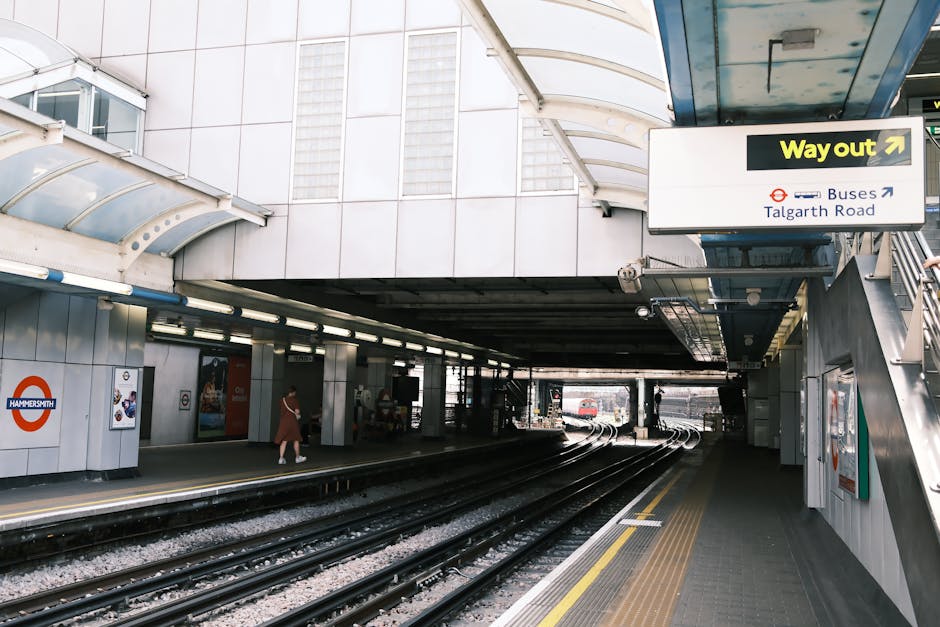
Hammersmith is a district in west London on the north bank of the River Thames, long shaped by its position on major routes into and out of central London. The area takes its name from Hammersmith Bridge and from the older settlement that developed around the river crossing and the road network nearby. Over time it became an important commercial and transport location, with offices, shops, public buildings and residential streets sitting close together rather than in completely separate districts. That mixed pattern still gives the area a busy urban character.
One of the best-known landmarks is Hammersmith Broadway, which functions as a major interchange and anchors the commercial centre. The district also includes the riverside stretches close to the Thames, where views, towpaths and bridges give the area a strong relationship with the water. Local streets contain a range of building types, from later twentieth-century office blocks to Victorian and Edwardian terraces, and that variety helps explain why the area feels both busy and layered. The neighbourhood also sits near Shepherd’s Bush, Fulham and Kensington, but it remains distinct in its own right.
Hammersmith has a lively cultural identity as well, with theatres, performance venues and long-established public houses contributing to the local atmosphere. The area is not only a transport junction but also a place where people work, travel and socialise across the same streets. Green space is available at nearby riverside and park locations, while the built environment remains dominated by roads, bridges and substantial commercial frontage. The result is an area with strong urban energy and a history of movement, trade and connection. If you need to request a quotation, the next section explains the final step.
Specialist items, fixtures and less straightforward removals
Some office clearances involve items that are awkward rather than simply heavy. Fixed reception units, partitions, storage walls, meeting-room tables and unusually large pieces of furniture can take more thought to remove safely. These are the jobs where clear access, sensible sequencing and the right level of dismantling make a real difference. If the office contains items that are attached to the building or installed as part of a fit-out, those details should be described so that the clearance can be planned properly.
It is also common for businesses to have items that are no longer wanted but still occupy significant space. Examples might include duplicated filing cabinets, old display units, damaged seating or mixed contents left behind after a restructure. In some cases a separate clearance for garage clearance is not relevant to an office at all, but it shows how different spaces can need very different removal methods depending on what is stored there and how access is arranged. Office work usually needs a more formal approach.
Where bulky pieces are involved, removal is easier when the route out of the building has been considered in advance. That does not mean every job needs a complicated plan; it simply means that doors, corridors and lifts should be checked against the size of the items involved. For some premises, the clearance is mostly a matter of careful lifting. For others, the main task is dismantling and carrying in stages so the space stays manageable.
Recycling, reuse and responsible handling
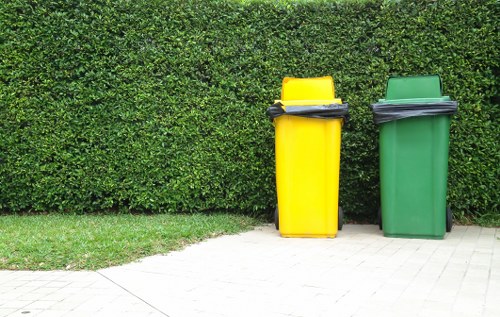
An office clearance often creates a mix of items with different possible outcomes. Some pieces may be suitable for reuse, some can be separated for recycling, and others will need to be removed as general waste. Where possible, we work with that distinction in mind so the contents are not treated as one undifferentiated load. That approach is particularly useful with furniture, metal storage items and components that can be separated from a larger piece.
For businesses that want a wider view of how discarded material is handled, our recycling and sustainability page explains the principles behind careful sorting and lower-waste outcomes. Office clearances benefit from the same practical attitude: do not assume that every item belongs in the same stream, and do not overlook furniture that may still have a usable life elsewhere. Where items are intended for disposal rather than reuse, the important point is to route them sensibly and keep the clearance orderly.
If you are arranging an office clearance in Hammersmith, the simplest next step is to gather the main details and ask for a quotation. One clear description of the rooms, items and access is usually enough to start the process, and any extra information can be added later if needed. You can also use the contact us page when you are ready to make an enquiry and move the clearance forward.